
Rocky Mountain Voice

Tag: Common Sense Institute

Colorado loses businesses at one of nation’s highest rates, new report finds
Rocky Mountain Voice, State, Top Stories

Colorado loses businesses at one of nation’s highest rates, new report finds

By Jen Schumann | Rocky Mountain Voice Colorado residents have spent years watching prices climb while business groups warn that operating in the state is becoming harder. A new report adds another layer of data to those concerns. Colorado ranked near the bottom nationally for net business establishment growth in 2024 and recorded the nation’s worst employment losses tied to business openings and closures, according to a new analysis from the Common Sense Institute. While most states added businesses and jobs last year, Colorado was one of only six states to lose ground in both categories, joining Massachusetts, New York, North Carolina, Oregon and Washington. Researchers pointed to high business costs and weakening confidence in Colorado’s economic outlook as growing warni...

Report Ties Colorado’s Fentanyl Death Surge To Weaker Drug Laws
Colorado Politics, Approved, State

Report Ties Colorado’s Fentanyl Death Surge To Weaker Drug Laws

By Jacob Mauk | Colorado Politics Overdose deaths from opioids rose in Colorado, diverging from the national trend, which has been decreasing, according to a new study from a think tank. In its new report, the Common Sense Institute said synthetic opioid overdose deaths in Colorado have grown by 17% since November 2024, the third-fastest growth rate in the country. The only states with higher spike rates are Arizona and New Mexico, according to the report. If Colorado had followed the national trend, some 1,600 lives could have been saved, the study said, adding the opioid deaths represented a cost of roughly $18.3 billion. “While this number does not encompass the entire value of human life, it does indicate that lives lost due to fentanyl and other opioids red...
From $8 Billion to $16 Billion: How Colorado’s Medicaid Budget Doubled in a Decade
Rocky Mountain Voice, State, Top Stories

From $8 Billion to $16 Billion: How Colorado’s Medicaid Budget Doubled in a Decade

By Shaina Cole | Contributing Writer, Rocky Mountain Voice If you ask most Colorado families how they feel about health care right now, the answers aren’t complicated. It’s expensive.It’s confusing.It keeps going up. And for taxpayers helping fund Colorado’s Medicaid program — known as Health First Colorado — another question has started to surface: If enrollment has come back down, why hasn’t spending followed? Ten years ago, Colorado’s Medicaid agency operated on roughly $8 billion. Today it’s closer to $16 billion. The Common Sense Institute (CSI) calculates that as 101 percent growth over the decade. CSI reports that the rest of the state operating budget grew 64 percent during that same period. The story of enrollment is different. ...
Colorado Human Trafficking Cases Reach Alarming High In 2025
Just The News, Approved, State

Colorado Human Trafficking Cases Reach Alarming High In 2025

By Derek Draplin | Just the News The analysis by Common Sense Institute Colorado uses data from the Federal Bureau of Investigation and the Colorado Bureau of Investigation. But the institute said the state’s data is undercounted due to data-entry lag, noting 2025 human trafficking numbers could end up exceeding record levels from 2023. Colorado saw “peak levels” for human trafficking in 2025 even without complete data for the year, a new analysis warns. The analysis by Common Sense Institute Colorado uses data from the Federal Bureau of Investigation and the Colorado Bureau of Investigation. But the institute said the state’s data is undercounted due to data-entry lag, noting 2025 human trafficking numbers could end up exceeding record levels from 2023. ...
Colorado Lawmakers Lean on Fees to Sidestep TABOR Tax Limits
Colorado Politics, Approved, State

Colorado Lawmakers Lean on Fees to Sidestep TABOR Tax Limits

By: Marissa Ventrelli | Colorado Politics More than 30 years after Colorado voters approved the Taxpayer’s Bill of Rights, a growing share of state spending now falls outside the voter-approved limits intended to restrain government growth. A new report shows that fee-funded “enterprises” — state-owned businesses exempt from TABOR’s revenue cap — have expanded dramatically, raising worries that lawmakers are increasingly relying on fees, rather than taxes, to fund government programs. At its core, TABOR limits the government’s ability to raise revenue. Political subdivisions must obtain voter approval for any tax increase, and it requires dollars above the TABOR limit to be refunded to residents. Numerous efforts have been made to repeal TABOR since its enactment. As r...
Homelessness Isn’t Just About Rent: Denver’s Spending Tells a Bigger Story
Rocky Mountain Voice, State, Top Stories

Homelessness Isn’t Just About Rent: Denver’s Spending Tells a Bigger Story

By Shaina Cole | Contributing Writer, Rocky Mountain Voice Denver once bought a motel to help move people off the street. Two years later, it made headlines for trying to sell that same property for ten dollars.  Denver’s homelessness debate almost always circles back to housing. Rents are high. Wages trail behind. Even when Denver adds housing, the gap doesn’t seem to close. From there, the “it’s housing” argument almost writes itself. But recent data suggest the drivers run deeper than housing alone. A January 2026 analysis from the Common Sense Institute looked at homelessness trends across the country and found that while housing affordability matters, it is not the strongest factor tied to homelessness — especially when it comes to people living on the...
Colorado Homelessness Linked More to Drugs Than Housing Costs Report Finds
DENVER7, Approved, State

Colorado Homelessness Linked More to Drugs Than Housing Costs Report Finds

By: Shannon Ogden | Denver7 New study from CSI shows governments must take "treatment first" approach instead of "housing first." DENVER — A new report from Common Sense Institute (CSI) finds that Colorado ranks among the highest states in the country for homelessness and that it's not housing affordability that's driving it, it's illicit drug use, crime rates, and policing levels. The report examines 2024 homelessness data across all 50 states and the nation’s largest metro areas. The CSI reports finds that Colorado ranks: 9th nationally in total homelessness rate 7th in chronic homelessness 10th in unsheltered homelessness 7th in homelessness involving severe mental illness 7th in homelessness involving chronic substance abuse Amo...
Private Dollars, Public Rivers: Who Is Really Restoring Colorado’s Streams?
Rocky Mountain Voice, State, Top Stories

Private Dollars, Public Rivers: Who Is Really Restoring Colorado’s Streams?

By Shaina Cole | Contributing Writer, Rocky Mountain Voice Colorado’s rivers are usually talked about as public assets. Debates tend to revolve around access, ownership, and enforcement. Far less attention is paid to a simpler question: who actually pays for the work when rivers need fixing? A recent Common Sense Institute report examines that side of the equation, focusing on stewardship and private investment while building on the group’s earlier work on law and history. Many Colorado landowners have invested in restoring rivers and streams, and the results don’t stop at their boundaries. Work Most People Never See River restoration doesn’t really have a finish line. The report estimates restoration and upkeep costs typically range from $300,000 ...
Colorado’s Budget Is Bigger Than Ever. Health Care Is Why.
Rocky Mountain Voice, State, Top Stories

Colorado’s Budget Is Bigger Than Ever. Health Care Is Why.

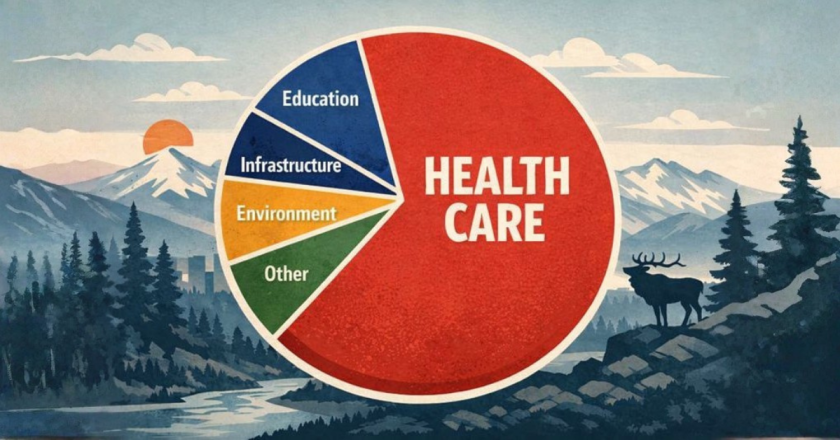
By Shaina Cole | Contributing Writer, Rocky Mountain Voice Colorado’s state budget is larger than it used to be. That much isn’t disputed. What has changed over the last twenty years is where that growth landed. The Common Sense Institute’s “Colorado Budget: Then and Now” (December 2025) Colorado’s state budget has grown faster than population and inflation since the mid-2000s. The shift wasn’t sudden. It accumulated, year by year, across multiple budgets and multiple administrations. The increase shows up clearly in the numbers. In the mid-2000s, state spending worked out to a little under $5,600 per person once population and inflation were accounted for. It didn’t stay there. Year by year, the number crept higher. It now sits above $7,300. The increase...